
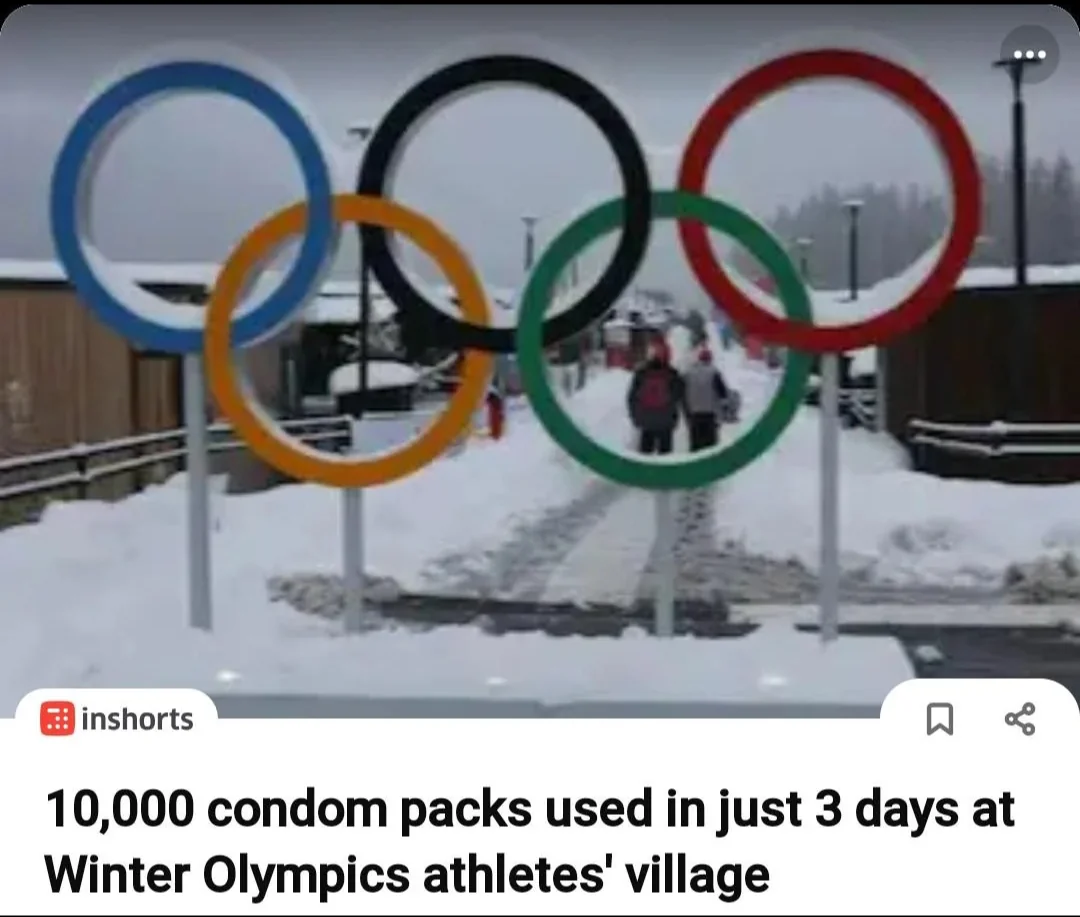

The Winter Olympic Village in Italy has reportedly run out of condoms just three days after the start of the Games, after athletes used up nearly 10,000 units distributed as part of a public health initiative.
According to Italian newspaper La Stampa, an anonymous athlete said supplies were exhausted within 72 hours of the Village opening. The athlete added that organizers had indicated more would arrive, but gave no clear timeline.
Olympic organizers traditionally provide free condoms to athletes residing in the Olympic Village, a practice aimed at promoting safe sex and raising awareness about sexually transmitted infections. This year’s stock, however, appears to have been significantly lower than at previous Summer Games, leading to rapid depletion.
The anonymous athlete cited by La Stampa suggested that organizers were not particularly generous with the numbers. By comparison, athletes at the 2024 Summer Games in Paris reportedly received around 300,000 condoms, roughly two per athlete per day. The total distributed in Italy for the Winter Games was reportedly under 10,000.
The distribution of condoms at the Olympic Village dates back to the 1988 Summer Games in Seoul, when organizers introduced the initiative as part of a broader public health campaign. Since then, it has become a routine and widely publicized aspect of the Olympic experience.
This year’s Winter Games feature approximately 2,900 athletes from 92 national Olympic committees competing in 116 events across 16 disciplines. The 2026 edition also marks the highest percentage of female athletes in Winter Games history, at 47 percent.
The reported shortage has drawn attention both inside and outside the Olympic Village, highlighting the scale of athlete participation and the logistical challenges of hosting a multi-sport international event.
Local officials have sought to downplay any controversy. Attilio Fontana, governor of the Lombardy region, defended the initiative publicly, emphasizing that it aligns with long-standing Olympic practice.
In a social media post, Fontana stated that providing free condoms to athletes should not be a cause of embarrassment. He noted that the initiative began at the 1988 Seoul Games as a way to promote awareness of sexually transmitted disease prevention among athletes and young people.
Fontana also reshared a video posted by Spanish figure skater Olivia Smart, in which she displayed condoms stamped with the Lombardy Region logo. The clip quickly went viral on social media, amplifying attention around the issue.
Reports of the shortage surfaced within days of the Games opening, as athletes inside the Village indicated that distribution points had already run dry. The rapid pace of consumption underscored the gap between supply and demand.
Organizers have not publicly confirmed exact distribution figures but are expected to replenish supplies as the Games continue.
Over the decades, the number of condoms distributed at Olympic Games has often reflected both the size of the athlete population and evolving public health strategies. Summer Games typically involve larger athlete delegations, which can partly explain the higher figures seen in cities such as Paris.
However, comparisons have fueled questions about planning and preparedness for the Winter edition in Italy.
As of the latest reports, additional shipments are anticipated, though officials have not provided a firm delivery schedule. The situation remains fluid as the Games move into their first full week of competition.
While the shortage is unlikely to overshadow the sporting competition itself, it has reignited discussion about Olympic logistics, public health messaging, and the realities of life inside the Village. With thousands of athletes living in close quarters for several weeks, organizers will be under pressure to ensure that established health practices are maintained through the remainder of the Games.