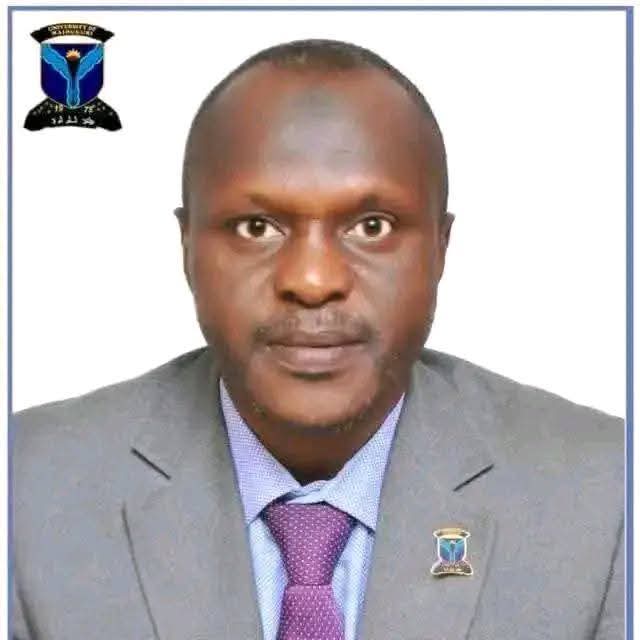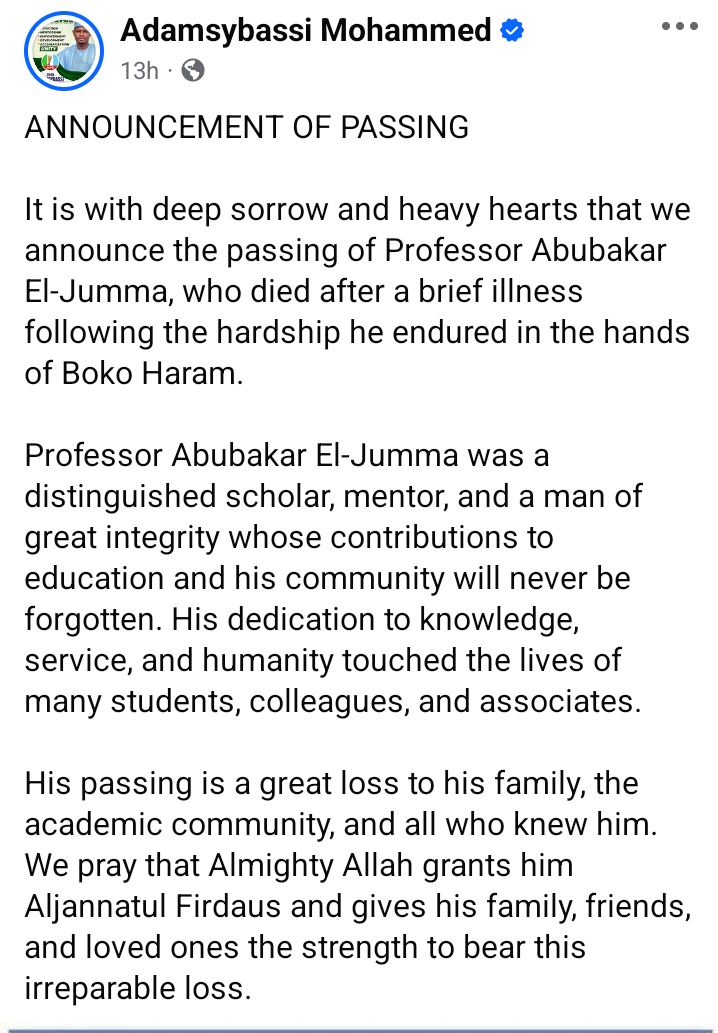
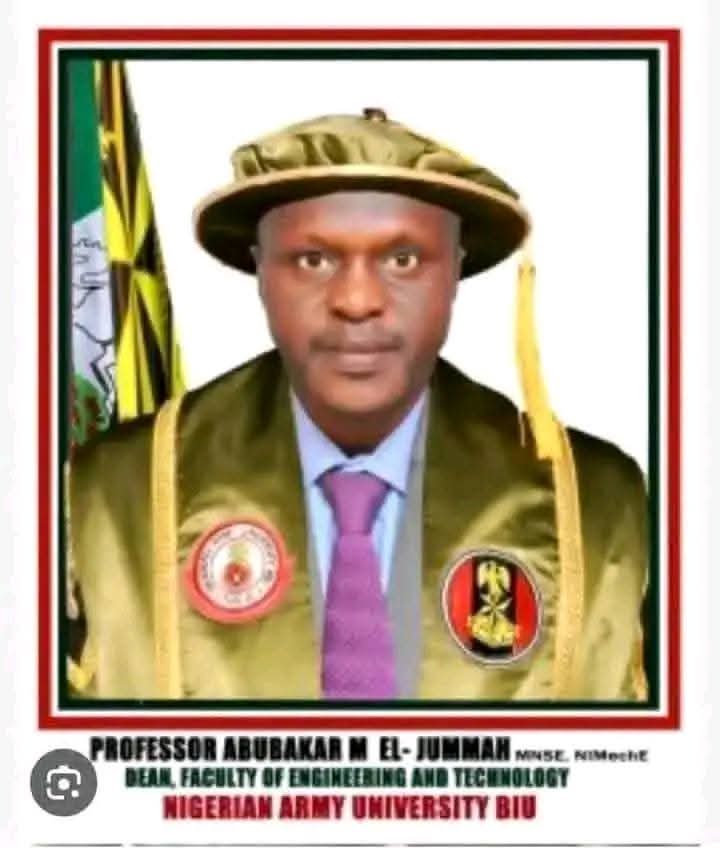

A professor at the Nigerian Army University Biu in Borno State, Abubakar Mohammed El-Jummah, has died while in Boko Haram captivity nearly a year after his abduction along the Damaturu-Biu Road. His family confirmed his death in a statement issued on Wednesday, February 11, 2026.
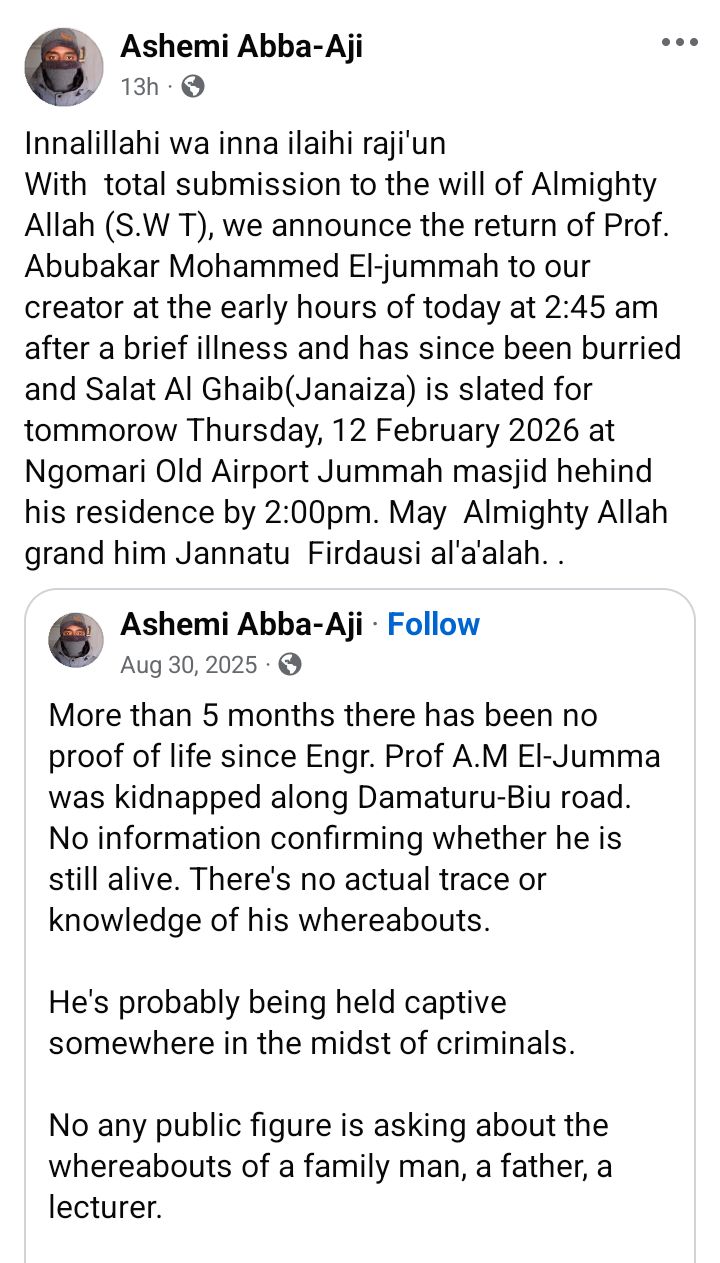
According to relatives, El-Jummah died in the early hours of Wednesday at about 2:45 a.m. following a brief illness linked to the hardship he endured during captivity. He was subsequently buried in accordance with Islamic rites.
The late academic had been abducted on March 2, 2025, along the Damaturu-Biu Road, a corridor long regarded as one of the most dangerous routes in Nigeria’s northeast due to repeated insurgent attacks and kidnappings. His disappearance underscored ongoing security challenges in Borno State and surrounding areas, where Boko Haram and splinter groups continue to operate despite years of military operations.
El-Jummah’s death highlights the persistent vulnerability of civilians and professionals in the region, including academics and public servants. While Nigerian security forces have intensified counterinsurgency efforts over the past decade, abductions for ransom and leverage remain a tactic employed by armed groups.
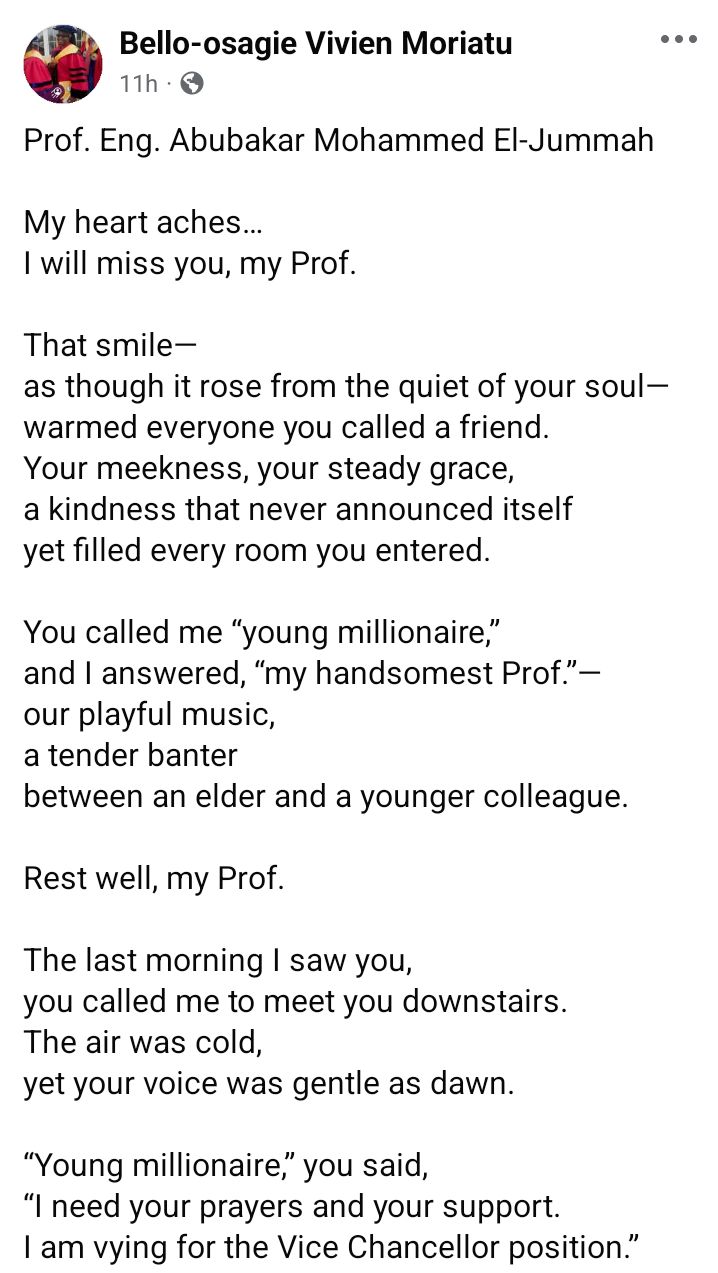
Family members described him as a distinguished scholar, mentor and man of integrity whose work significantly influenced students and colleagues. His academic contributions extended beyond the Nigerian Army University Biu, with strong ties to the University of Maiduguri community.
Following confirmation of his passing, funeral arrangements were swiftly announced. He has already been laid to rest according to Islamic tradition. A Salat al-Ghaib, or funeral prayer in absentia, is scheduled to take place on Thursday, February 12, 2026, at the Ngomari Old Airport Juma’at Mosque behind his residence in Maiduguri at 2:00 p.m.
The news has triggered renewed reflection on the human cost of Nigeria’s prolonged insurgency. For many in Borno State, El-Jummah’s death is not only a personal tragedy but also a stark reminder of the continuing security crisis affecting communities, institutions and families across the region.
As condolences pour in from colleagues and former students, attention is once again turning to the broader question of civilian protection and the fate of those still held by insurgent groups. His death marks another chapter in the long-running conflict in Nigeria’s northeast and reinforces calls for sustained security reforms and humanitarian support.