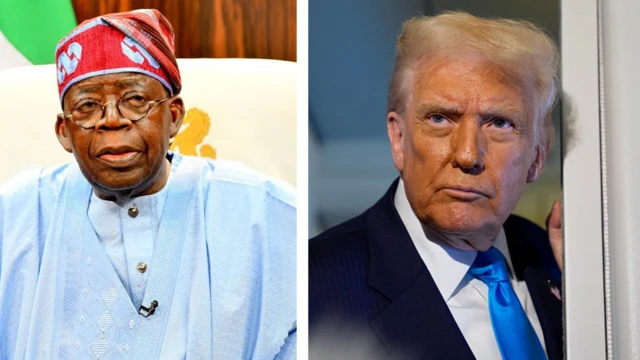

The Federal Government of Nigeria has dismissed allegations of religious persecution, rejecting claims contained in a report submitted by United States lawmakers to Donald Trump. The government said insecurity in the country is driven by criminal and extremist threats rather than religious bias or official policy.
Minister of Information Mohammed Idris confirmed the government’s position in response to findings presented by members of the US House Committees on Appropriations and Foreign Affairs. The report followed months of investigations and field assessments into alleged persecution of Christian communities and extremist violence in parts of Nigeria.
The report emerged after the United States redesignated Nigeria as a Country of Particular Concern, a classification reserved for nations accused of severe violations of religious freedom. The move triggered a congressional probe led by lawmakers tasked with assessing security conditions and religious freedom concerns, reflecting growing international scrutiny over violence linked to insurgency, banditry, and communal conflict.
Nigeria has long faced security challenges from extremist groups and armed criminal networks, particularly in northern and central regions. These conflicts have resulted in thousands of deaths, mass displacement, and widespread destruction of property over the past decade.
The congressional inquiry was spearheaded by Riley Moore and House Appropriations Committee Chairman Tom Cole. Their findings were presented following extensive bipartisan engagement and consultations aimed at assessing threats facing Christian communities and broader security conditions.
Moore confirmed submission of the report after discussions at the White House, describing the process as part of a sustained effort to evaluate religious freedom concerns.
In response, Nigeria’s Information Ministry rejected suggestions of state-backed persecution. Idris stated that while the government acknowledges serious security threats, these challenges are rooted in terrorism, organized crime, and communal tensions rather than religious discrimination.
He emphasized that Nigeria has no official policy targeting any religious group and that security agencies are responding to criminal threats affecting citizens across religious and ethnic lines.
The government also reaffirmed its constitutional commitment to protecting freedom of religion and ensuring equal treatment under the law.
The issue intensified after the United States formally renewed Nigeria’s Country of Particular Concern designation, elevating diplomatic and political attention on the country’s internal security situation. Congressional leaders subsequently initiated a probe to examine allegations and assess their implications for US foreign policy.
Nigeria’s response marked a direct rebuttal to the conclusions of that investigation, signaling a firm defense of its internal governance and security policies.
Over recent years, Nigerian authorities have faced mounting pressure from international partners and human rights organizations over violence linked to insurgency and communal unrest. However, government officials have consistently maintained that these conflicts stem from complex security dynamics rather than religious targeting.
Diplomatic engagement between Nigeria and its international allies has continued alongside ongoing counterterrorism and security operations aimed at stabilizing affected regions.
Idris said Nigeria remains open to dialogue with international partners while stressing the importance of respecting the country’s sovereignty and constitutional framework. He noted that Nigeria values its longstanding relationship with the United States and remains committed to constructive cooperation.
The government also reaffirmed its priority of protecting lives and restoring stability nationwide.
The dispute underscores growing international attention on Nigeria’s security crisis and its broader implications for diplomatic relations and human rights oversight. As global scrutiny continues, Nigeria’s government faces the dual challenge of strengthening security while defending its international standing, with future diplomatic engagement likely to shape how the crisis is perceived abroad.