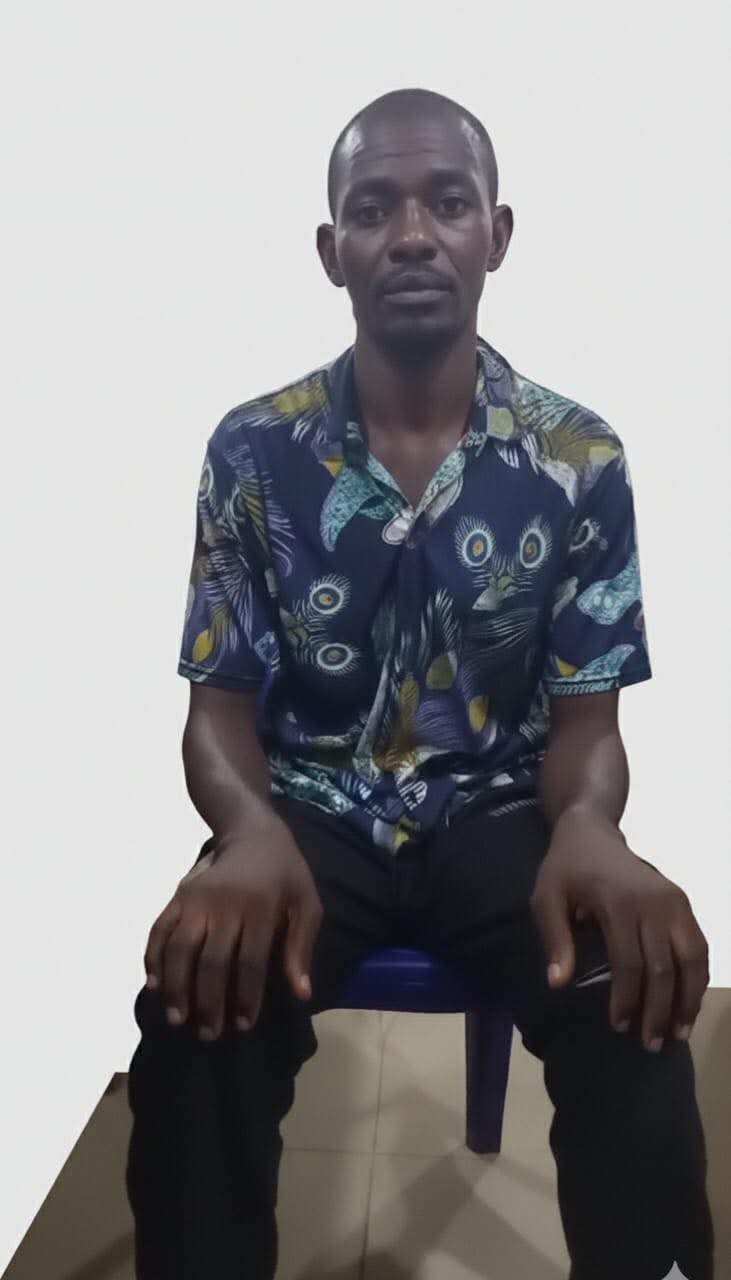

Operatives of the Department of State Services have arrested the final suspect linked to the 2022 terrorist attack on St. Francis Catholic Church, Owo, an assault that killed more than 40 worshippers and injured dozens. The suspect, identified as Sani Yusuf, was apprehended in Edo State after evading capture for nearly four years, marking a major development in one of Nigeria’s most devastating recent terror cases.
The arrest comes as the DSS continues prosecuting five other suspects accused of orchestrating and carrying out the attack. The defendants, Idris Omeiza, Al Qasim Idris, Jamiu Abdulmalik, Abdulhaleem Idris, and Momoh Otuho Abubakar, are facing terrorism-related charges tied to the deadly assault, which shocked the nation and drew widespread condemnation.
The church attack, carried out during a Sunday service in June 2022, represented a significant escalation in terrorist activity targeting civilian and religious gatherings in southern Nigeria. Authorities later linked the massacre to the Islamic State West Africa Province, a militant organization responsible for numerous attacks across the country. The incident intensified national security operations and reinforced concerns about the geographic expansion of extremist violence beyond traditional conflict zones in the northeast.
Security sources said Yusuf had been under surveillance for years before his arrest in the Iguosa community, located in Ovia North Local Government Area of Edo State. Investigators believe he fled to Kano State shortly after the church attack before relocating to Edo State in an effort to avoid detection. His ability to remain hidden for years underscored the challenges security agencies face in tracking high-ranking militant operatives.
Authorities identified Yusuf as a senior ISWAP commander with operational responsibilities extending beyond the Owo church massacre. During interrogation, he allegedly confessed to participating in the planning and execution of the attack, as well as other coordinated terrorist operations across multiple states.
Security officials also linked him to the July 2022 assault on the Suleja military barracks and multiple kidnapping operations in Kaduna State, both of which were attributed to ISWAP networks seeking to destabilize government security infrastructure.
Investigators said Yusuf admitted involvement in the attack on a military checkpoint near Zuma Rock, an operation that resulted in the deaths of five soldiers. Intelligence gathered during the investigation also revealed that he operated under senior ISWAP leadership, including Abu Ikirimah, who was arrested by DSS operatives in 2024.
His capture followed years of coordinated intelligence gathering, surveillance, and counterterrorism operations aimed at dismantling ISWAP cells operating outside traditional insurgency zones.
The DSS has steadily expanded its counterterrorism efforts since the Owo attack, arresting key suspects and disrupting militant networks linked to ISWAP. Authorities say the group has attempted to establish operational footholds in new regions, increasing the urgency of intelligence-led operations nationwide.
The ongoing prosecution of the five previously arrested suspects has been a central component of the government’s strategy to ensure accountability and deter further attacks.
Security officials described Yusuf’s arrest as a decisive breakthrough in the investigation, noting that his interrogation could provide critical intelligence on ISWAP operations, recruitment strategies, and planned attacks.
The DSS is expected to incorporate new intelligence obtained from Yusuf into broader counterterrorism efforts as investigators work to dismantle remaining militant networks.
The arrest represents a major step toward justice for the victims of the Owo church massacre and signals renewed momentum in Nigeria’s fight against terrorism. As prosecutions continue and intelligence operations expand, authorities face mounting pressure to prevent future attacks and restore public confidence in national security efforts.