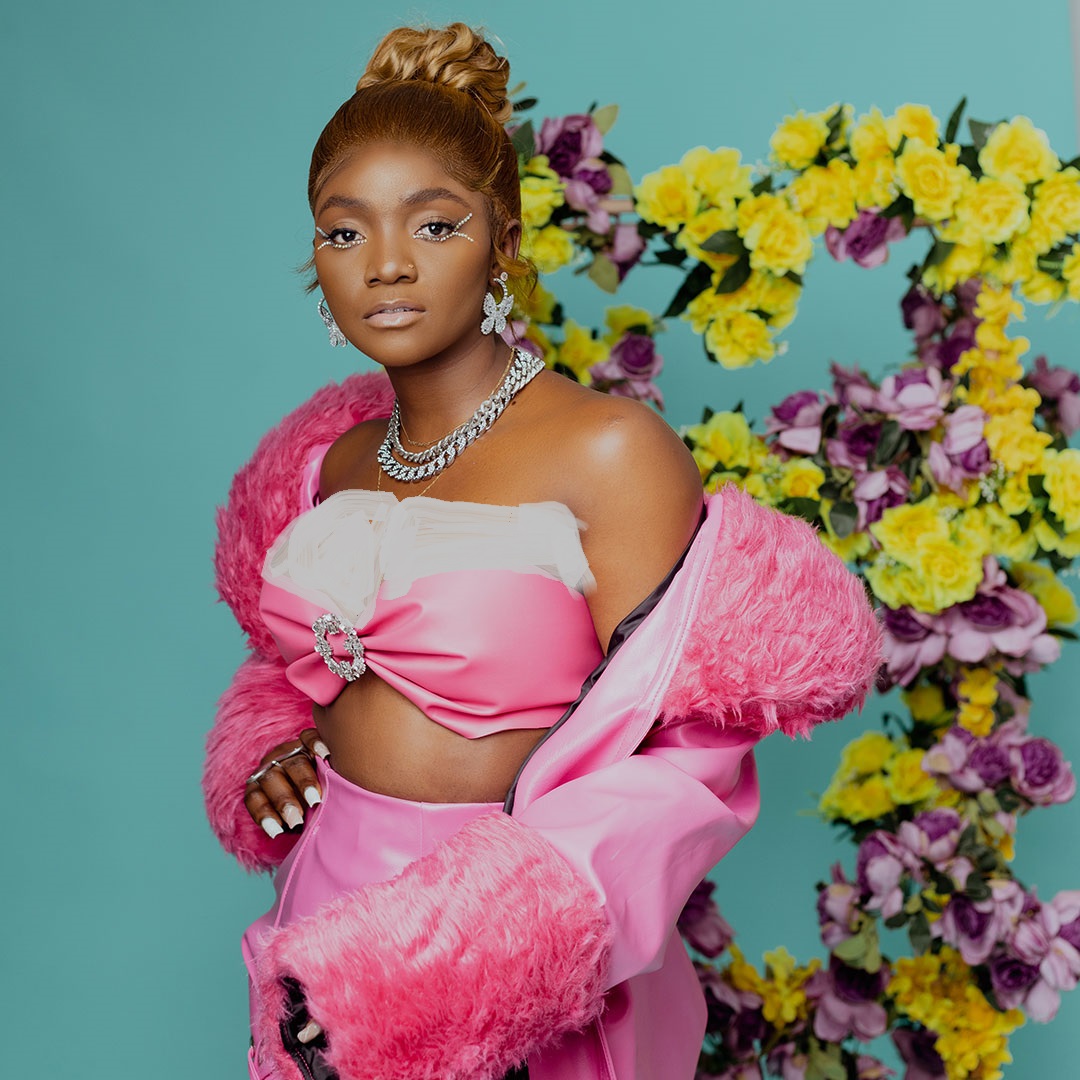

Old social media posts by Simi have resurfaced online, triggering widespread criticism after users shared screenshots of tweets in which she made remarks about Igbo people. The posts, originally published in 2014, circulated rapidly over the weekend, drawing renewed scrutiny of the singer’s past online activity.
The tweets were rediscovered and amplified by users on X, where screenshots showed Simi making comments that referenced Igbo identity and cultural stereotypes. Some users described the remarks as offensive and insensitive, while others urged caution, noting the significant passage of time since the posts were made.
The resurfacing of historical social media posts has become increasingly common as public figures face heightened scrutiny over their digital footprints. In Nigeria, where ethnic identity remains a sensitive and influential aspect of national discourse, public comments perceived as stereotyping or dismissive of specific groups often provoke strong public reactions.
Simi, a prominent figure in Nigeria’s contemporary music industry, rose to fame in the mid 2010s with chart-topping singles and has since built a reputation as a respected singer, songwriter, and performer. Her influence has grown alongside the expansion of Nigeria’s global music presence.
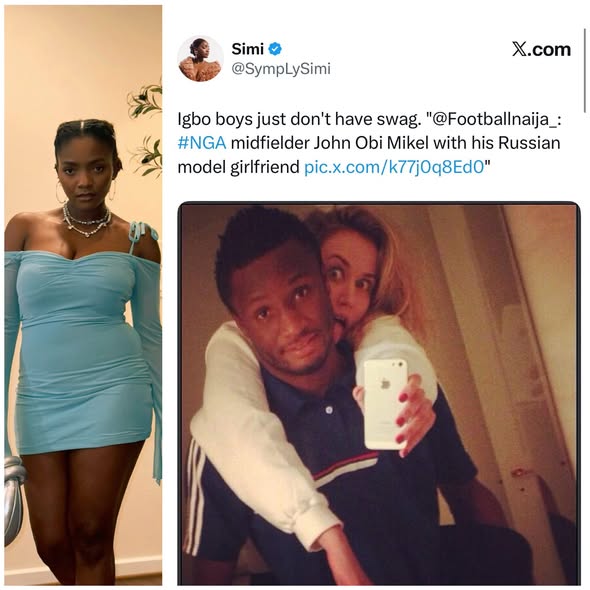
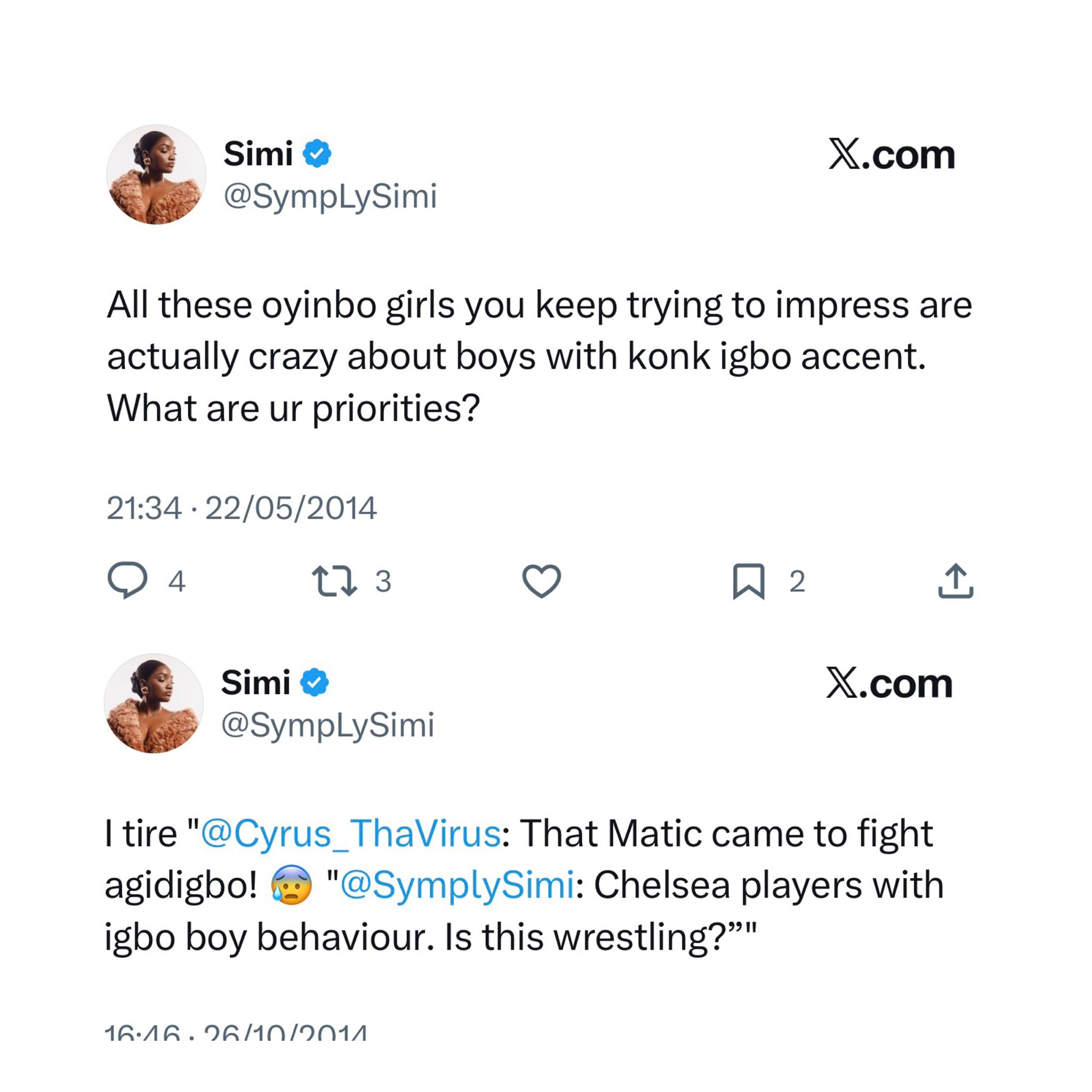
The controversy emerged after archived screenshots began circulating widely, bringing renewed attention to tweets posted during an earlier stage of Simi’s career. In one post, she wrote that Igbo boys lacked swag, while another referenced accents and social preferences. In a separate tweet, she compared the conduct of Chelsea FC players during a football match to what she described as Igbo boy behaviour.
The remarks quickly became a focal point of online debate, particularly among Nigerian social media users, where discussions around ethnicity and public accountability often generate significant engagement.
As the screenshots spread, reactions divided sharply. Critics argued the comments reflected harmful stereotypes and called for accountability, while others emphasized that the posts dated back more than a decade and may not reflect the artist’s current views.
The controversy gained traction as influential social media accounts reshared the screenshots, amplifying their reach and prompting broader discussion across digital platforms.
The situation intensified over the weekend as more users reposted and commented on the tweets. The renewed attention brought the issue into mainstream online conversations, with some users highlighting the broader impact of public figures’ words, particularly in a country as diverse as Nigeria.
Others focused on the timing, arguing that older posts should be viewed within the context of personal growth and evolving perspectives.
Public reaction continued to evolve as the discussion expanded beyond the original posts. Some commentators framed the controversy as part of a wider pattern in which celebrities face retrospective examination of their past statements.
At the same time, supporters pointed out that many public figures have undergone personal and professional development since their early careers, urging a balanced assessment of past and present conduct.
As of the latest developments, the resurfaced tweets remain a trending topic within Nigerian social media spaces. The renewed attention has intensified discussions about accountability, forgiveness, and the permanence of online records.
The situation has also drawn attention to the broader cultural and social dynamics that shape public discourse in Nigeria’s digital era.
The controversy underscores the enduring impact of social media history and the heightened scrutiny facing public figures in the digital age. As conversations continue, the episode highlights the complex intersection of celebrity influence, cultural sensitivity, and the evolving expectations placed on prominent voices in Nigeria’s public sphere.