
The Federal Airports Authority of Nigeria has addressed a viral claim by a passenger who alleged he was detained at Murtala Muhammed International Airport for filming with a personal camera inside the terminal.
In a statement released on X on February 21, the aviation agency said the passenger was not detained but was questioned after recording in a restricted security screening area where signage clearly prohibits filming.
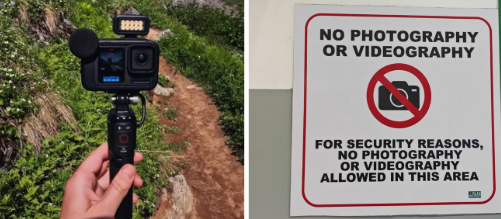
The controversy began when the passenger, identified by the handle @chupatric, posted that he had been stopped by Aviation Security officials while using a GoPro camera to document his travels for his YouTube channel. He said he was taken to an office and asked to explain the footage stored on his device, questioning whether personal recordings were permitted inside the airport.
Context
Airports worldwide operate under strict security protocols, particularly in screening zones where sensitive equipment, procedures, and personnel are present. In Nigeria, filming within certain operational and security areas is restricted to prevent the exposure of vulnerabilities and to protect passenger privacy.
Complaints about unauthorized filming of travelers have also become more frequent in recent years, as content creation and travel vlogging have increased. Aviation authorities have maintained that restrictions apply primarily to sensitive zones and instances where other passengers are recorded without consent.
Situation Overview
According to FAAN, the incident occurred within a designated Security Screening area at the Abuja airport. The agency said clear signage indicates that filming is not permitted in that section of the terminal.
Officials stated that Aviation Security officers approached the passenger and politely requested that he stop recording, citing privacy concerns and operational sensitivity. When he declined to comply immediately, he was invited to the Crime Investigation and Intelligence Unit office for clarification.
Key Developments
FAAN emphasized that the passenger was not placed under detention. Instead, the interaction focused on explaining acceptable camera use within airport premises.
The agency said the passenger subsequently deleted the recording in question, provided a written undertaking, and was allowed to proceed with his journey without further disruption.
Critical Moments
The turning point in the incident came when officers determined that filming was taking place in a restricted zone. Authorities say intervention was triggered not by general personal recording but by the location and nature of the footage.
The matter was resolved after the passenger complied with security guidance and agreed to remove the restricted footage.
Developments Over Time
The incident gained traction online after the passenger publicly questioned airport filming rules. FAAN’s response sought to clarify the distinction between general personal videos and recordings that capture other passengers or sensitive operational areas.
The agency reassured travelers that personal selfie videos are not prohibited. It said intervention occurs only when recordings infringe on privacy or security regulations.
Late Developments
In its statement, FAAN reiterated that its measures are designed to protect passenger privacy, safety, and smooth airport operations. The agency stressed that enforcement actions are limited to instances involving restricted zones or unauthorized capture of security processes.
What It Means
The episode underscores the growing tension between digital content creation and aviation security protocols. As more travelers document their journeys for social media platforms, authorities are likely to continue balancing personal freedoms with operational safeguards.
For passengers, the message from FAAN is clear. Personal filming is permitted, but security screening areas and sensitive operations remain off limits.