
Andrew Mountbatten-Windsor has been released from a police station following his arrest on Thursday morning on suspicion of misconduct in public office, marking a dramatic escalation in long-running scrutiny over his association with convicted sex offender Jeffrey Epstein.
The arrest forms part of an investigation into allegations that Andrew shared sensitive information during his tenure as the United Kingdom’s trade envoy. Officers have also conducted searches at properties linked to him, including his residence at Royal Lodge. He has consistently denied any wrongdoing connected to Epstein.
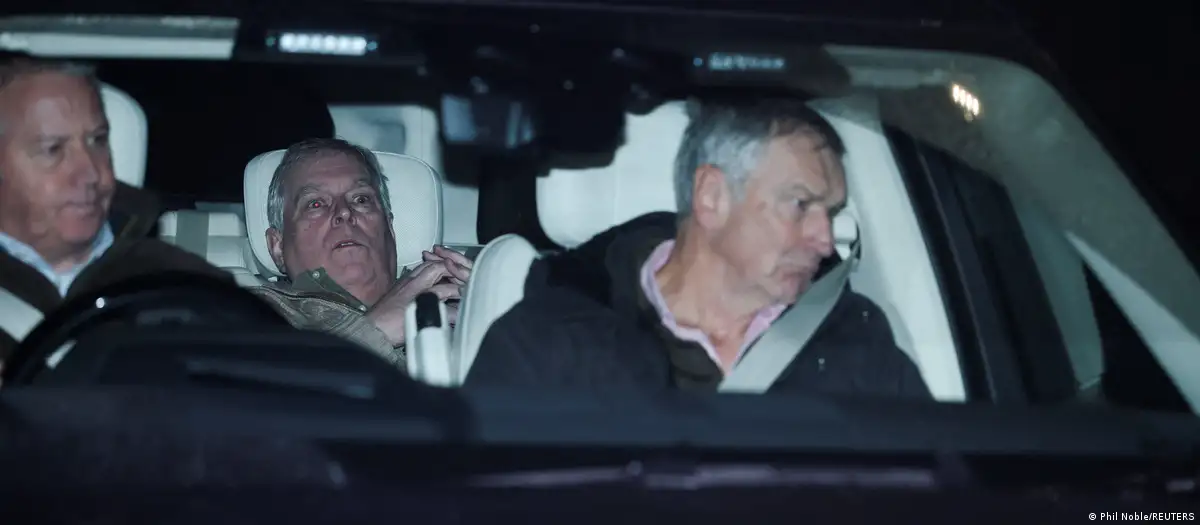
A photograph taken as he left the station showed Andrew slouched in the back seat of a vehicle, apparently attempting to avoid the waiting press photographers. The image underscored the gravity of a moment that few in modern British royal history have witnessed.
King Charles III expressed deepest concern over his brother’s arrest, according to reports, as the royal household faces renewed public scrutiny. The palace has not provided detailed comment beyond acknowledging the development.
Context
Andrew’s ties to Epstein have shadowed him for years, culminating in his withdrawal from public royal duties amid mounting controversy. The latest arrest significantly raises the stakes, shifting the matter from reputational damage to potential criminal proceedings.
Royal historian Christopher Wilson told Deutsche Welle that authorities would likely have assembled a substantial body of evidence before proceeding with such a high-profile arrest. He suggested police and political leaders would not sanction an action of this magnitude without confidence in the strength of their case.
Situation Overview
The arrest on Thursday morning followed what appears to have been a coordinated investigative effort. Officers searched multiple properties linked to Andrew, including Royal Lodge, signaling the seriousness of the probe and the possibility of further developments.
The allegations center on his conduct during his time as a UK trade envoy, a role that once positioned him as a senior representative of British commercial interests abroad. Investigators are examining whether confidential or sensitive information was improperly shared.
Key Developments
Andrew was detained on suspicion of misconduct in public office before being released later the same day. Police have not announced charges, and no formal indictment has been issued at this stage.
Wilson argued that the case could ultimately proceed to a criminal court. He stated that the scale of the intervention suggests investigators believe they have a strong legal foundation.
Critical Moments
The public sight of a senior royal being escorted from a police station represents a rare and consequential moment. According to Wilson, no member of the royal family has faced arrest in approximately 600 years. He referenced the case of Charles I of England, who was tried and executed in the 17th century, although he acknowledged that such an outcome is not comparable to the present case.
The symbolism of the arrest, however, has already resonated widely, reigniting debate about accountability within the monarchy.
Developments Over Time
Andrew stepped back from official royal duties amid earlier fallout linked to Epstein. His removal from frontline public life was seen as an attempt to shield the monarchy from sustained controversy.
The current investigation marks a significant evolution from reputational crisis to potential criminal exposure. Public reaction has intensified, with scrutiny now extending beyond personal associations to questions of official conduct.
Late Developments
As of Thursday evening, Andrew remains uncharged but under investigation. Authorities have not disclosed further details about the evidence gathered or the timeline for potential next steps.
Wilson predicted that Andrew would remain in the United Kingdom to face any forthcoming proceedings, describing the outlook as bleak.
What Comes Next
The coming weeks are likely to determine whether prosecutors move forward with formal charges. The implications extend beyond Andrew personally, touching on institutional accountability and public trust in the monarchy.
If the investigation proceeds to court, it would represent one of the most consequential legal challenges involving a senior royal in modern history.