
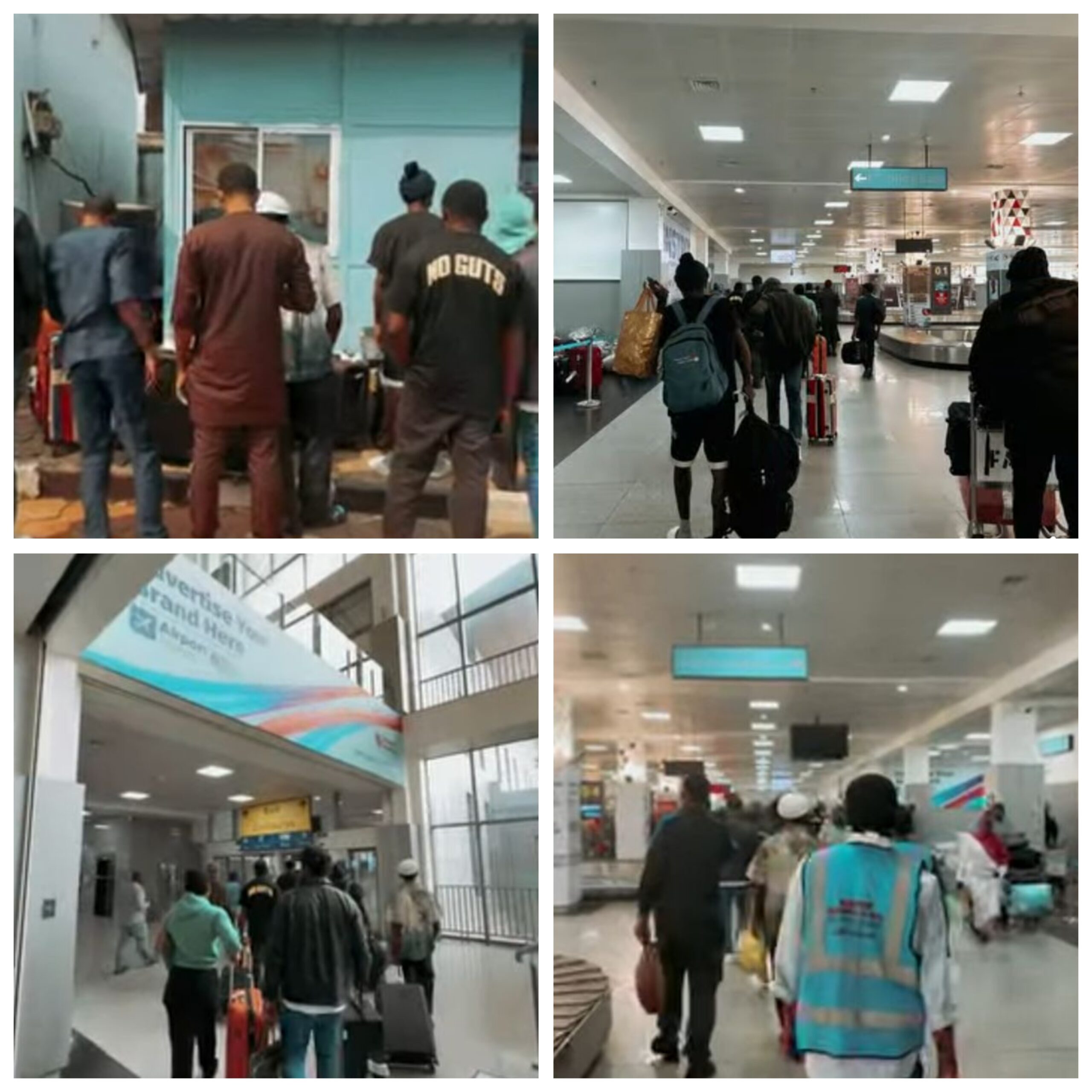

The National Agency for the Prohibition of Trafficking in Persons has rescued and repatriated 23 Nigerian youths who were trafficked to Thailand and other Southeast Asian countries for cyber-enabled criminal activities, the agency announced on Wednesday.
Director General Binta Adamu Bello disclosed that the victims were lured abroad with promises of scholarships and lucrative employment, only to be forced into online fraud schemes. The operation was carried out in collaboration with Eden in Myanmar, with critical support from the British Government and the Nigerian Embassy in Bangkok.
The victims have since arrived in Nigeria. According to NAPTIP, they were trafficked to Myanmar, Thailand, Laos and Cambodia, where they were allegedly compelled to participate in romance scams, cryptocurrency-related fraud and fake investment schemes targeting victims across several countries.
Context
Human trafficking has long been associated with forced labor and sexual exploitation. However, authorities say a new pattern is emerging in which traffickers recruit educated and tech-savvy youths for organized cybercrime networks operating across Southeast Asia.
The development comes weeks after Bello pledged a tougher stance against trafficking syndicates and promised to strengthen collaboration with international partners to dismantle criminal networks targeting Nigerians.
Security agencies have increasingly warned that transnational criminal groups are exploiting the global demand for remote work and digital services to lure young people abroad. The rise of cryptocurrency and cross-border online platforms has further complicated enforcement efforts.
Situation Overview
NAPTIP said the traffickers deliberately targeted intelligent young men and women, particularly those with computer and IT skills and clean health records. Victims were reportedly promised educational opportunities and well-paying jobs.
On arrival in the destination countries, they were allegedly trained in various forms of online fraud. Some were enrolled in language schools, particularly to learn Chinese, before being assigned roles as customer service agents tasked with deceiving targets.
The victims told authorities they were instructed to target individuals and organizations in the United States, the United Kingdom, Ethiopia and Canada.
Key Developments
According to the agency, the youths were housed in hostels with bunk beds and provided with digital equipment to carry out fraudulent operations. They were placed under strict surveillance by armed enforcers and given daily performance targets.
Failure to meet those targets reportedly resulted in severe punishment. Some victims alleged physical torture, while others claimed that those who resisted participation faced extreme abuse.
NAPTIP described the accounts as deeply disturbing and indicative of a sophisticated trafficking syndicate operating across borders.
Critical Moments
The rescue operation followed coordinated engagement between Nigerian authorities, civil society organizations in South Asia and foreign governments. The Nigerian Embassy in Bangkok played a key role in facilitating documentation and issuing Emergency Travel Certificates for some of the victims.
Officials say the operation marks a significant breakthrough in efforts to disrupt emerging cyber trafficking corridors linking West Africa to Southeast Asia.
Developments Over Time
Over the past year, anti-trafficking authorities have reported a gradual shift in recruitment tactics. Instead of targeting only economically vulnerable individuals, syndicates are increasingly focusing on skilled youths who can be exploited for digital fraud.
Bello said the agency has reactivated international partnerships to identify, track and dismantle the networks responsible. She added that efforts are underway to arrest ringleaders and disrupt financing channels.
Late Developments
NAPTIP confirmed that investigations are ongoing and that further operations may follow as intelligence sharing improves. The agency also acknowledged the role of Eden in Myanmar, the British Government and the Nigerian Embassy in Bangkok in ensuring the victims’ safe return.
What This Means
The rescue underscores a troubling evolution in human trafficking patterns, with organized crime groups leveraging digital skills for transnational fraud operations. For Nigerian authorities, the case signals an urgent need for tighter surveillance of recruitment networks and stronger international cooperation.
As investigations continue, officials say dismantling the syndicates behind these operations will be critical not only to protecting vulnerable Nigerians but also to addressing the broader global threat posed by cyber-enabled trafficking networks.