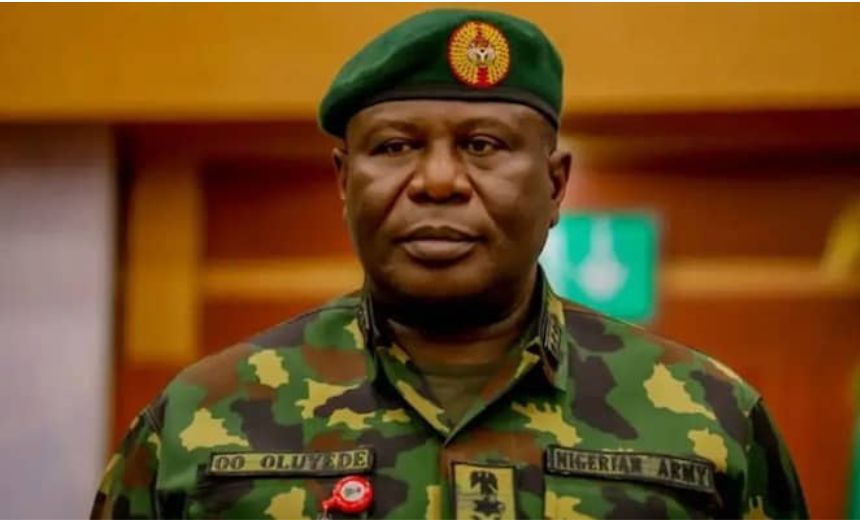

Nigeria’s Chief of Defence Staff, Lt. Gen. Olufemi Oluyede, has announced plans to deploy a new Joint Special Task Force, code-named Savanah Shield, to confront rising terrorist activities in Kwara State and parts of Niger State. The announcement was made on Tuesday during the 2026 budget defence session before the House of Representatives Committee on Defence in Abuja.
Oluyede said the Defence Headquarters is intensifying nationwide security operations despite limited resources. He confirmed that a joint task commander has been appointed for the new operation and that resources are being redeployed from other areas to ensure adequate coverage in the affected states.
The proposed deployment comes as Nigeria continues to battle shifting security threats across multiple regions. While military operations have recorded gains against insurgent groups in the North-East, authorities acknowledge that serious challenges persist in the North-West and North-Central zones.
Security analysts have warned in recent months of emerging threats in parts of the North-Central corridor, with concerns about armed groups expanding their operational reach. Kwara State, historically considered relatively stable compared to other northern states, has increasingly featured in security discussions as authorities move to prevent spillover violence.
Oluyede told lawmakers that the armed forces are adapting their operational strategies to match evolving threats within existing budget constraints. He noted that a new set of special forces had recently been trained and deployed to Benue and Plateau states, both of which have faced recurrent communal and militia-related violence.
He also acknowledged that the military cannot secure the country alone. The Defence Chief called for stronger collaboration with the Nigeria Police Force and the Nigeria Security and Civil Defence Corps, stressing that intelligence sharing and inter-agency coordination remain critical to sustaining gains.
Beyond institutional cooperation, Oluyede appealed directly to citizens to support intelligence gathering efforts and refrain from collaborating with criminal groups. He described national security as a collective responsibility requiring community participation.
Lawmakers used the session to press for accountability and strategic reform within the defence sector. Chairman of the House Committee on Defence, Rep. Benson Babajimi, said security remains central to Nigeria’s development trajectory. He commended the armed forces for degrading terrorist strongholds but warned that persistent threats demand deeper institutional reforms and smarter use of limited resources.
Babajimi emphasised that increased defence spending must translate into measurable outcomes. He argued that input-focused budgeting without visible impact is no longer acceptable, urging transparency and efficiency in procurement and project execution.
The lawmaker also broadened the discussion beyond military action, identifying poverty, youth unemployment, illiteracy, weak local governance, misinformation, community grievances and ideological radicalisation as underlying drivers of insecurity. He advocated a whole-of-government and whole-of-society approach that incorporates strategic communication, community peacebuilding, enhanced cyber defence, improved intelligence capabilities and stronger border security technology.
As the National Assembly reviews the 2026 defence budget, attention is expected to focus on balancing active military operations with long-term peacebuilding efforts. Personnel welfare, equipment modernisation and the sustainability of ongoing operations remain key concerns.
The launch of Savanah Shield signals an effort to contain emerging threats before they escalate further. Its success will likely depend not only on military deployment but also on coordination, reform and the broader socio-economic strategies lawmakers say are essential to securing lasting stability.