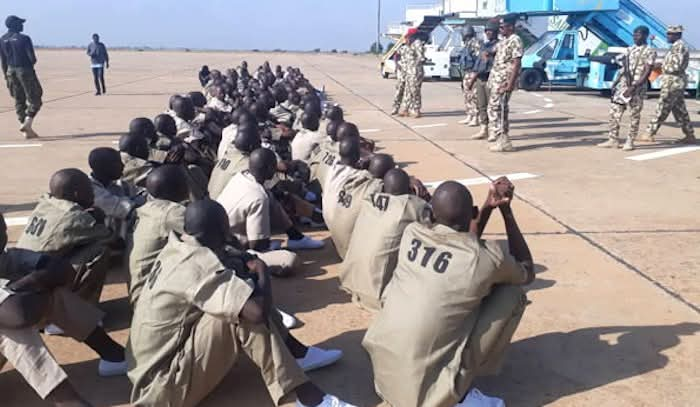

A total of 117 repentant terrorists from Borno State have completed Nigeria’s Disarmament, Rehabilitation and Reintegration programme under Operation Safe Corridor, marking a fresh milestone in the country’s counter insurgency framework.
The development was announced on Thursday by the Director of Defence Information, Maj. Gen. Samaila Uba, following a high level stakeholders’ meeting convened by Defence Headquarters at the Nigerian Army Resource Centre. The meeting focused on finalising arrangements for transferring rehabilitated individuals to national and state authorities for reintegration into their communities.
Brig. Gen. Y. Ali, Coordinator of Operation Safe Corridor, confirmed that the 117 participants concluded the DRR process at Mallam Sidi Camp in Borno State. He described the graduation as evidence of strengthened coordination between federal and state governments in handling reception, monitoring and community reintegration of former fighters.
Context
Operation Safe Corridor was launched in 2016 as part of Nigeria’s broader counter insurgency strategy. While military operations target active combatants, the programme focuses on disarmament, deradicalisation and structured reintegration of those who surrender.
The initiative emerged at a time when insurgency in the North East had severely destabilised communities, displaced millions and strained regional security. Authorities argue that sustainable peace requires more than battlefield victories. They maintain that long term stability depends on preventing recidivism and addressing the ideological and social drivers of violence.
Situation Overview
The latest graduation was disclosed during a strategic meeting that brought together representatives from federal ministries, the Office of the National Security Adviser, state governments and international partners. Delegations from neighbouring countries including Burkina Faso, Chad, Niger and Cameroon also participated, underscoring the regional dimension of the insurgency.
International organisations such as the International Committee of the Red Cross and the International Organization for Migration were present, alongside representatives from Norway, the United Kingdom, the European Union and the Foreign, Commonwealth and Development Office.
Key Developments
Ali highlighted that the programme has expanded beyond the North East. In the North West, a DRR camp established in February last year was described as a significant stabilisation milestone.
Engagements are ongoing with Zamfara State to recalibrate the facility into a broader Victim Healing, Rehabilitation and Reintegration framework. The proposed model integrates psychosocial recovery, community reconciliation, livelihood support and structured monitoring.
In the North Central region, Benue State has formally requested the establishment of a DRR camp. Defence Headquarters has assessed proposed sites and advised that they meet national standards on infrastructure, security and sustainability before approval is granted.
Critical Moments
The graduation of the 117 participants represents a critical transition point. Following completion of the rehabilitation phase, the individuals are to be transferred to state authorities for reintegration.
Senior defence officials emphasised that this phase is pivotal. Reintegration determines whether former combatants successfully return to civilian life or risk relapse into violence. The handover process requires coordination across security agencies, local governments and community leaders.
Developments Over Time
Since its launch, Operation Safe Corridor has processed multiple batches of surrendered insurgents, evolving in structure and oversight. The programme now operates within a broader national stabilisation strategy that seeks to align federal and state responsibilities.
As insurgency dynamics shift and banditry expands into other regions, demand for DRR facilities has grown. States affected by violence are increasingly seeking structured rehabilitation frameworks to complement security operations.
Late Developments
At the meeting, the Chief of Defence Staff and Chairman of the Operation Safe Corridor National Steering Committee, Gen. Olufemi Oluyede, represented by Maj. Gen. Jamal Abdusalam, reaffirmed that the programme remains central to Nigeria’s security architecture.
He stressed that while kinetic operations create space for stability, long term security gains depend on effective rehabilitation and reintegration measures that prevent a return to violence.
Closing
The completion of the programme by 117 former insurgents signals continued reliance on a dual strategy that blends military pressure with rehabilitation efforts. As the initiative expands into new regions, its effectiveness in reintegrating former fighters and stabilising affected communities will shape the next phase of Nigeria’s security response.